

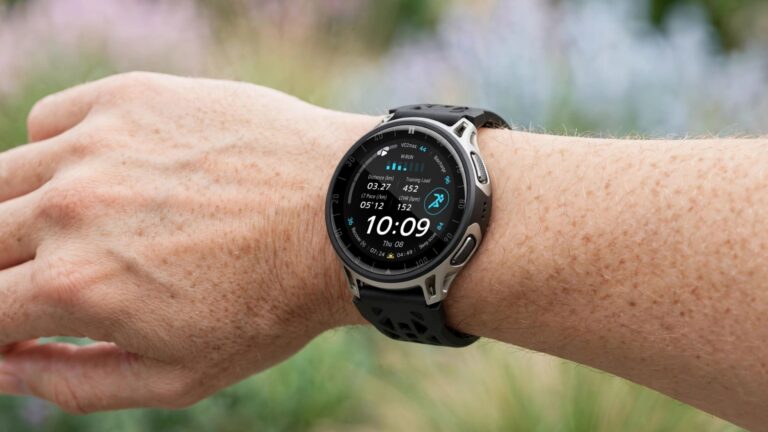
Serious triathletes shopping for a GPS watch in 2026 will notice immediately that the Garmin Forerunner 970 pairs a sapphire lens and lightweight titanium bezel with Garmin’s brightest AMOLED display, a combination previously reserved for the brand’s most premium lineup. This Garmin Forerunner 970 Review breaks down every key spec, the real trade-offs, and exactly which athletes will get the most from it. If you want to put your training data in context, our running pace calculator pairs well with the metrics this watch surfaces.

Garmin Forerunner 970 Specs at a Glance
The table below covers the core specifications drawn directly from official product data.
| Spec | Details |
|---|---|
| Display | Brightest AMOLED touchscreen with button controls |
| Case Size | 47mm |
| Lens | Sapphire |
| Bezel | Lightweight titanium (Carbon Gray DLC) |
| Battery Life | Up to 15 days (smartwatch mode), up to 26 hours (GPS mode) |
| GPS | Multi-band GPS with full-color built-in maps and dynamic round-trip routing |
| Health Sensors | Heart rate, HRV, ECG app (atrial fibrillation detection), running economy, step speed loss (HRM-600 required), running tolerance, training readiness score |
| Communication | Built-in microphone and speaker for phone calls; smartphone voice-assistant support |
| Extra Feature | Built-in LED flashlight |
| Bezel Material | Lightweight Titanium (Carbon Gray DLC) |
| Comparison |
|
What We Like and What to Consider
Here is a balanced look at where the Garmin Forerunner 970 excels and where shoppers should think carefully before buying.
What We Like
- Brightest AMOLED display in the Forerunner line: Garmin describes this as their most vivid screen yet, making maps and metrics easy to read in direct sunlight.
- Sapphire lens and titanium bezel: This material pairing delivers scratch resistance and a lightweight feel that verified owners consistently highlight as a premium upgrade over previous Forerunner models.
- Advanced running metrics: Running economy and step speed loss (with the HRM-600 monitor) give performance-focused athletes granular insight into energy efficiency that most competing watches do not surface.
- Built-in LED flashlight plus wrist calls: The onboard microphone and speaker let you take phone calls from your wrist, while the LED flashlight adds real safety value for pre-dawn or post-sunset runs.
What to Consider
- Step speed loss requires a separate accessory: The HRM-600 heart rate monitor is sold separately, so the full running economy picture comes at an additional cost beyond the watch price.
- 26-hour GPS battery is not class-leading: The Amazfit Cheetah 2 Pro claims 31 hours in accurate GPS mode, which matters for ultra-distance athletes who need every extra hour on course.
- Garmin ecosystem commitment: Training readiness, Garmin Coach plans, and dynamic routing work best within Garmin Connect, so athletes already invested in a competing platform will face a learning curve.
Who Should Buy the Garmin Forerunner 970 (and Who Should Skip It)
The Forerunner 970 is purpose-built for a specific type of athlete, so matching it to your situation matters.
- Buy it if you train for triathlons or running events and want personalized Garmin Coach plans that adapt automatically to your recovery and performance data.
- Buy it if you run in low-light conditions regularly and want a sapphire-lens watch with a built-in LED flashlight and the option to take calls from your wrist.
- Buy it if you want full-color onboard maps with dynamic round-trip routing so your watch can recalculate a new path mid-run without pulling out your phone.
- Skip it if you are an ultra-runner who needs more than 26 hours of continuous GPS, as the Amazfit Cheetah 2 Pro or Garmin’s Enduro line would serve those distances better.
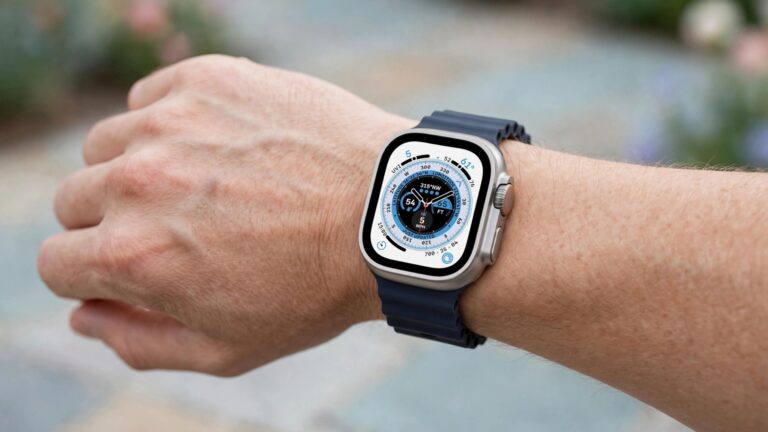
- Skip it if you are an iPhone user who prioritizes seamless Apple Health integration and native iOS features, where an Apple Watch Ultra 2 would be a more natural fit.
Final Thoughts
The Garmin Forerunner 970 is a compelling choice for performance-driven runners and triathletes who want Garmin’s most advanced display, durable sapphire and titanium construction, and deep adaptive training tools in a single package. The single biggest reason to choose it over the competition is the combination of running economy metrics, dynamic rerouting maps, and Garmin Coach triathlon plans, all working together inside one ecosystem.
If GPS endurance beyond 26 hours is your top priority for ultra-distance events, a different model in the Garmin Enduro family would be a more practical match. To track how your daily calorie burn aligns with your training load, our TDEE calculator can give you a useful baseline alongside the watch’s readiness score.
FAQs
Does the Garmin Forerunner 970 work with Android phones?
Yes, the Forerunner 970 is compatible with both Android and iPhone via the Garmin Connect app. Features like wrist calls and voice-assistant replies require your paired smartphone to be nearby and connected.
How long does the battery last during a triathlon or long run?
Garmin rates the Forerunner 970 at up to 26 hours in GPS mode, which covers most full-distance triathlons and marathon training runs. In smartwatch mode without active GPS, battery life extends to up to 15 days.
Can the Forerunner 970 detect atrial fibrillation?
Yes, the built-in ECG app can record your heart rhythm and check for signs of atrial fibrillation, though it is not available in all countries and is intended for users 22 years or older. If you want to understand how sleep and recovery relate to your heart health trends, our sleep calculator can help you identify your optimal rest windows alongside the watch’s HRV data.
Do I need to buy anything extra to get the full running metrics?
Most metrics work out of the box, but step speed loss and the full running economy picture require the HRM-600 heart rate monitor, which is sold separately. All other features, including multi-band GPS, training readiness, and Garmin Coach plans, are fully functional with the watch alone.
Write Your Review
No reviews yet. Be the first to share your experience!