

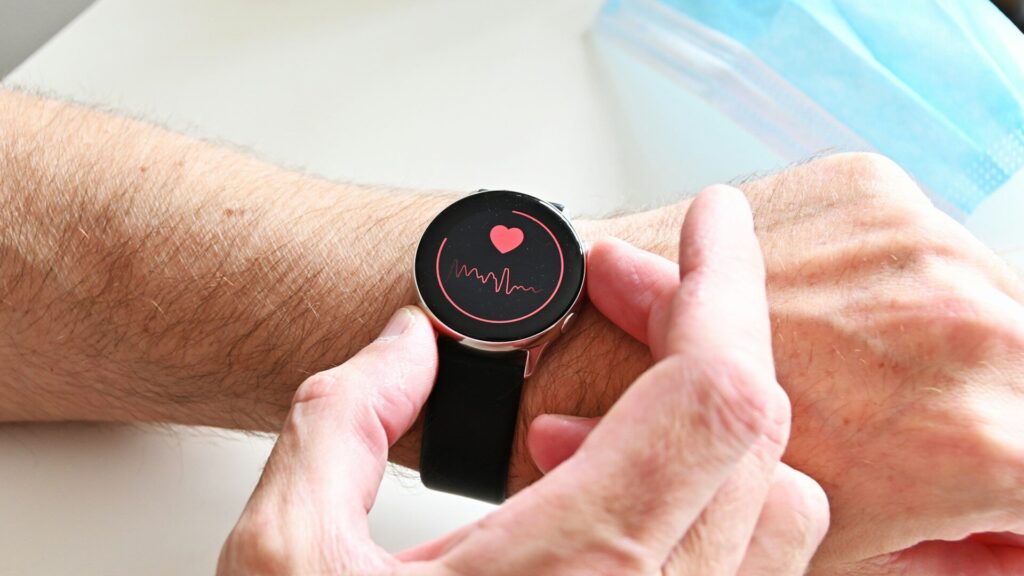
Blood oxygen tracking moved from hospital clips to everyday watches and rings. SpO2 is the percentage of hemoglobin in your blood that carries oxygen, and wearables now estimate it during the day or while you sleep. The numbers are useful for spotting trends, as long as you know how they are measured and where their limits are.
How Wearables Measure SpO2
- The sensor shines red and infrared light into the skin.
- Oxygen-rich blood absorbs these two wavelengths differently from oxygen-poor blood.
- Light detectors measure how much of each wavelength comes back.
- An algorithm compares the two signals and estimates the percentage of oxygen-carrying hemoglobin.
Fingertip pulse oximeters use the same principle but shine light through the finger. Wrist sensors read reflected light instead, which makes them more sensitive to movement and fit. Our guide on how optical heart rate sensors work covers the green-light side of the same sensor.
What the Numbers Usually Look Like
The table below gives general reference ranges for healthy adults. Your doctor’s guidance always comes first.
| Reading | What It Often Means |
|---|---|
| 95 to 100 percent | Typical range for healthy adults at low altitude |
| 90 to 94 percent | Can occur at altitude or during sleep, worth watching |
| Below 90 percent | Low, and worth discussing with a doctor if repeated |
| Sudden single dips | Often movement or a loose fit |
Quick answer: most healthy adults read 95 percent or higher, and trends matter more than any single reading.
What Affects Accuracy
- Movement: readings are most reliable when you are still or asleep.
- Fit: a loose band lets outside light in.
- Cold hands: less blood flow near the skin weakens the signal.
- Altitude: readings naturally drop at higher elevations.
- Skin and tattoos: pigment and ink can affect how light travels.
How to Use SpO2 Data Well
- Look at overnight averages and trends rather than single spot checks.
- Sit still with your arm resting for manual readings.
- Note changes during illness, travel to altitude or poor sleep.
- Share repeated low readings with a doctor instead of self-diagnosing.
On iPhone, readings appear in Apple Health, and on Galaxy watches in the Samsung Health app.
Limits You Should Know
Most wearable SpO2 features are designed for general wellness, not medical diagnosis. They cannot replace a medical-grade pulse oximeter or a sleep study. Some brands offer separately cleared sleep apnea notification features, but standard blood oxygen readings alone should not be used to rule a condition in or out.
Final Thoughts
Wearables measure SpO2 by comparing how your blood absorbs red and infrared light. Readings are most useful as overnight trends, and anything persistently low deserves a conversation with a doctor rather than a second reading.
Explore more sensor guides in our features explained section.
FAQs
What is a normal SpO2 reading on a smartwatch?
Usually 95 to 100 percent for healthy adults at low altitude. Readings can dip slightly during sleep.
Are smartwatch blood oxygen readings accurate?
They are reasonable for trends but less precise than medical devices. Movement and fit affect results.
Can a smartwatch detect sleep apnea from SpO2?
Not on its own. Talk to a doctor about a sleep study if you suspect sleep apnea.
Why is my SpO2 lower at night?
Breathing slows during sleep, so small dips are common. Repeated low readings are worth discussing with a doctor.


Write Your Review
No reviews yet. Be the first to share your experience!