

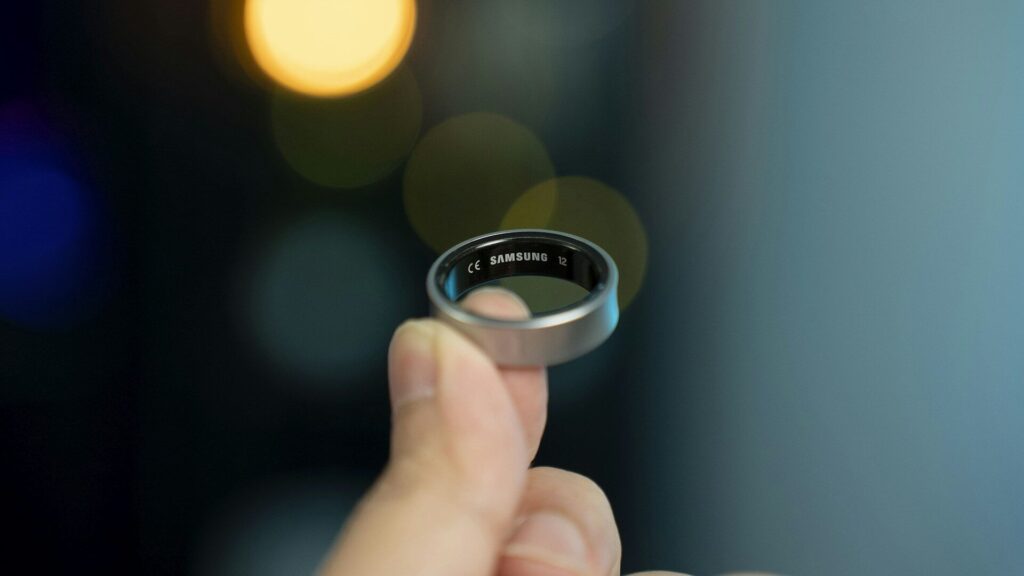
The smart ring vs smartwatch question comes down to what you want to track and when you want to see it. A ring disappears on your finger and shines at night. A watch puts data on your wrist all day and handles workouts with GPS, maps and notifications. Both measure many of the same signals, so the right choice depends on your routine more than on a spec sheet.
What Each One Measures
| Feature | Smart Ring | Smartwatch |
|---|---|---|
| Sleep stages and overnight heart rate | Strong, very comfortable in bed | Good, but some people find it bulky at night |
| Skin temperature trends | Common on most rings | Available on many recent models |
| Built-in GPS for runs and rides | No, uses your phone | Yes on most models |
| Screen and notifications | None | Yes |
| Typical battery life | About 4 to 8 days | About 1 to 14 days depending on model |
| Payments, calls, apps | Rare | Common |
Where a Smart Ring Wins
- Sleep comfort: a ring weighs a few grams, so you forget it is there overnight.
- Battery: most rings last close to a week, which means fewer missed nights.
- Fewer distractions: no buzzing screen, just a morning summary in the app.
- Style: it pairs with a dress watch or jewelry without looking like a gadget.
If sleep and recovery are your main goals, read our smart ring buying guide before ordering, because sizing matters more than with any watch.
Where a Smartwatch Wins
- Workouts: live heart rate, pace and distance on your wrist, plus built-in GPS on most models.
- Daily convenience: notifications, timers, music control, payments and calls.
- Safety tools: fall detection and emergency calling on many models.
- App choice: third-party apps and watch faces for almost any routine.
Our complete smartwatch buying guide explains how to match features to your phone and budget.
Ongoing Costs to Factor In
The sticker price is only part of the story. Some rings and trackers lock deeper insights behind a monthly membership, while most smartwatches include their core health features at no extra charge. Before you buy, check whether sleep scores, readiness insights and long-term trends are free or paid. Our list of smart rings without a subscription is a good starting point if you want to avoid fees.
Can You Wear Both?
Yes, and many people do. A common setup is a watch during the day for workouts and notifications, and a ring at night for sleep, so the watch can charge while you get ready in the morning. Most health apps can combine data from both, although you may see small differences between the two readings.
Final Thoughts
Pick a smart ring if sleep, recovery and comfort matter most and you rarely look at your wrist during the day. Pick a smartwatch if you train with GPS, want notifications, or value safety features. If you cannot decide, start with the device that fits your biggest goal, then add the other later. Compare more options in our smartwatch vs fitness tracker guide.
FAQs
Is a smart ring more accurate than a smartwatch for sleep?
Rings often match or beat watches for overnight data. The finger has strong blood flow and the ring moves less, but a well-fitted watch is also reliable.
Can a smart ring track workouts?
Yes, but with fewer details. Rings record heart rate and activity, yet most rely on your phone for GPS and show no live stats.
Which lasts longer on a charge?
Smart rings usually last longer. Most run about four to eight days, while many full smartwatches need charging every one to three days.


Write Your Review
No reviews yet. Be the first to share your experience!