

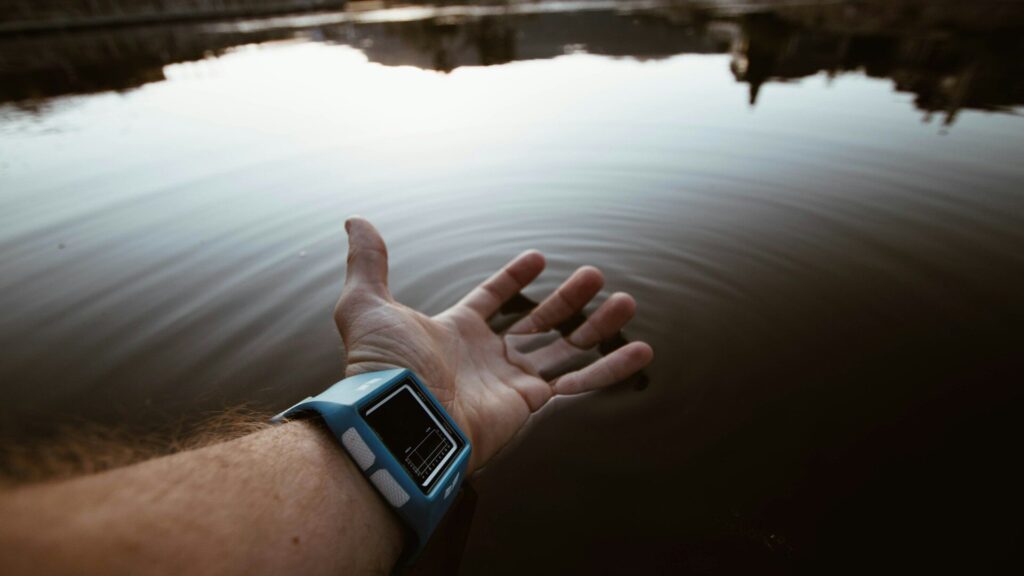
A water-rated smartwatch can handle the pool or the ocean, but what you do after swimming matters as much as the rating. Salt crystals and chlorine left to dry around buttons, speakers and seals slowly wear them down. A two-minute routine keeps your watch in good shape for years.
Why Salt and Chlorine Are a Problem
- Salt dries into crystals that can stiffen buttons and crowns.
- Chlorine can dry out gaskets and fade some band materials over time.
- Both leave residue on sensors that can affect readings.
The After-swim Routine
- Turn off water lock or swim mode. On many watches, this also pushes water out of the speaker.
- Rinse the watch under gentle, lukewarm fresh tap water for a few seconds.
- Rinse the band separately if it comes off easily.
- Pat the watch dry with a soft, lint-free cloth.
- Leave it to air dry, buttons and openings facing down, before charging.
Quick answer: eject water, rinse with fresh water, pat dry and let the watch air dry fully before charging.
Salt Water vs Pool Care
The table below shows small differences between the two.
| Step | Salt Water | Chlorinated Pool |
|---|---|---|
| Rinse | Always, and soon after | Always, after each swim |
| Buttons and crown | Press and turn while rinsing to clear salt | Rinse around them |
| Band | Rinse to remove salt and sand | Rinse to reduce fading |
| Extra check | Look for salt crystals or sand at the edges | Watch for band discoloration |
Only press buttons under fresh running water if your watch’s manufacturer allows it.
Charging and Band Care
- Never charge a wet watch. Moisture on the contacts can cause corrosion.
- Silicone and fluoroelastomer bands handle water well. See our guide on how to clean a silicone watch band.
- Nylon and fabric bands stay wet for hours. See how to clean a nylon sport loop.
- Leather bands should not go swimming at all.
Habits to Avoid
- Jumping from a hot tub or sauna straight into the pool with the watch on.
- Drying the watch with a hair dryer or on a hot surface.
- Using soap or shower gel on the watch.
- Swimming with a watch that has a cracked screen or case.
Check how deep and how hard your watch can go with our guides on what 5 ATM means and IP68 vs 10 ATM.
Final Thoughts
What you do after swimming protects your watch more than any rating. Eject the water, rinse with fresh water, dry it gently and let it air dry before charging. Add a quick band rinse, and salt and chlorine will not get the chance to build up.
For a full cleaning routine, see our guide on how to clean your smartwatch.
FAQs
Do I need to rinse my smartwatch after swimming in a pool?
Yes, a quick fresh water rinse removes chlorine. It helps protect seals and the band.
Can I charge my watch right after swimming?
No, let it dry completely first. Moisture on the contacts can cause corrosion.
How do I get water out of my watch speaker?
Turn off water lock or use the water eject feature. Many watches play a tone to push water out.
Is salt water worse than pool water for a smartwatch?
Salt water is usually harder on buttons and seals. Rinse soon after every ocean swim.



Write Your Review
No reviews yet. Be the first to share your experience!