

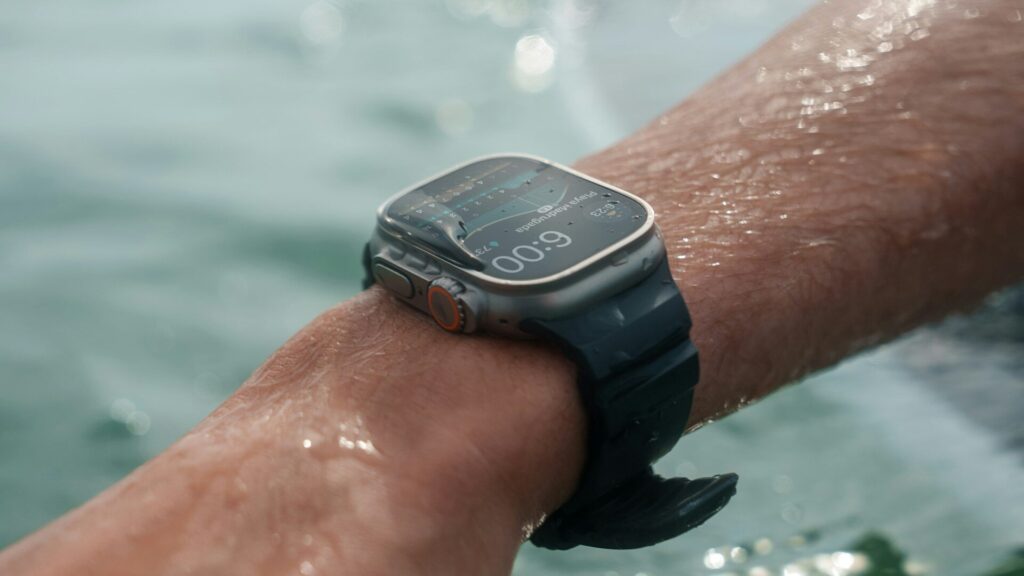
A smartwatch box that says “water resistant to 5 ATM” sounds like you could take it 50 meters underwater. You should not. The rating describes lab pressure conditions, not a depth you can safely dive to, and the difference matters the first time you jump into a pool.
Here is what 5 ATM means in practice and how it compares with other ratings you will see.
What 5 ATM Actually Means
ATM stands for atmospheres of pressure. A 5 ATM rating means the watch is built for pressure equal to about 50 meters of still water under the ISO 22810 standard.
Real swimming creates extra pressure from movement, which is why the rating is not a diving depth. In everyday terms, 5 ATM covers:
- Handwashing, rain and sweat
- Showering (avoid hot water and soaps)
- Swimming laps in a pool
- Shallow open-water swimming
Quick answer: 5 ATM is safe for swimming, not for diving or water skiing.
Water Ratings Compared
This table shows what each common rating is designed for.
| Rating | Safe For | Not Designed For |
|---|---|---|
| IP67 / IP68 | Splashes, rain, brief submersion | Swimming |
| 5 ATM | Showers, pool laps, shallow swims | Diving, high-speed water sports |
| 10 ATM | Snorkeling, surfing, water sports | Scuba diving |
| EN13319 dive rated | Recreational dives to the stated depth | Deep or technical diving |
For more plain-English spec breakdowns, see our features explained guides.
Which Smartwatches Are 5 ATM or Higher
Most current smartwatches from major brands are rated at least 5 ATM, including Apple Watch Series and SE models, Samsung Galaxy Watch, Google Pixel Watch, and many Garmin, Amazfit and Fitbit models. Rugged models such as Apple Watch Ultra, Galaxy Watch Ultra and Garmin Fenix go further with 10 ATM or dive ratings.
Always check the exact model, since sizes and editions can differ. Our smartwatch buying guide covers water ratings alongside battery and sensors.
What Still Damages a Water-resistant Watch
Water resistance is not permanent and it is not unlimited.
- Hot water: saunas, hot tubs and hot showers weaken seals.
- Soap and lotion: they break down gaskets over time.
- Impact: diving off a board or high-speed water sports spike the pressure.
- Drops: a hard knock can crack a seal you cannot see.
- Age: seals wear out, so resistance declines over the years.
How to Protect Water Resistance
- Rinse the watch in fresh water after the pool or the ocean.
- Turn on water lock or swim mode if your watch has it.
- Do not press buttons underwater unless the watch is designed for it.
- Dry it fully before charging.
Our guide on how to clean your smartwatch walks through rinsing and drying safely.
Final Thoughts
5 ATM means your smartwatch can handle swimming, showers and rain, but not diving or high-impact water sports. It is the right rating for most people.
If you snorkel, surf or dive, look for 10 ATM or an EN13319 dive rating instead. Browse rugged options in our Garmin section.
FAQs
Can I swim with a 5 ATM smartwatch?
Yes, 5 ATM is designed for swimming laps. Rinse it with fresh water afterward, especially after chlorine or salt water.
Can I dive with a 5 ATM watch?
No, 5 ATM is not a diving rating. Scuba diving needs a watch certified to EN13319 for the depth you plan to reach.
Is IP68 better than 5 ATM?
No, IP68 is meant for brief submersion, not swimming. For pool use, choose 5 ATM or higher.
Can I shower with my smartwatch?
Yes, with care. Avoid hot water, soap and shampoo, which wear down seals over time.


Write Your Review
No reviews yet. Be the first to share your experience!