

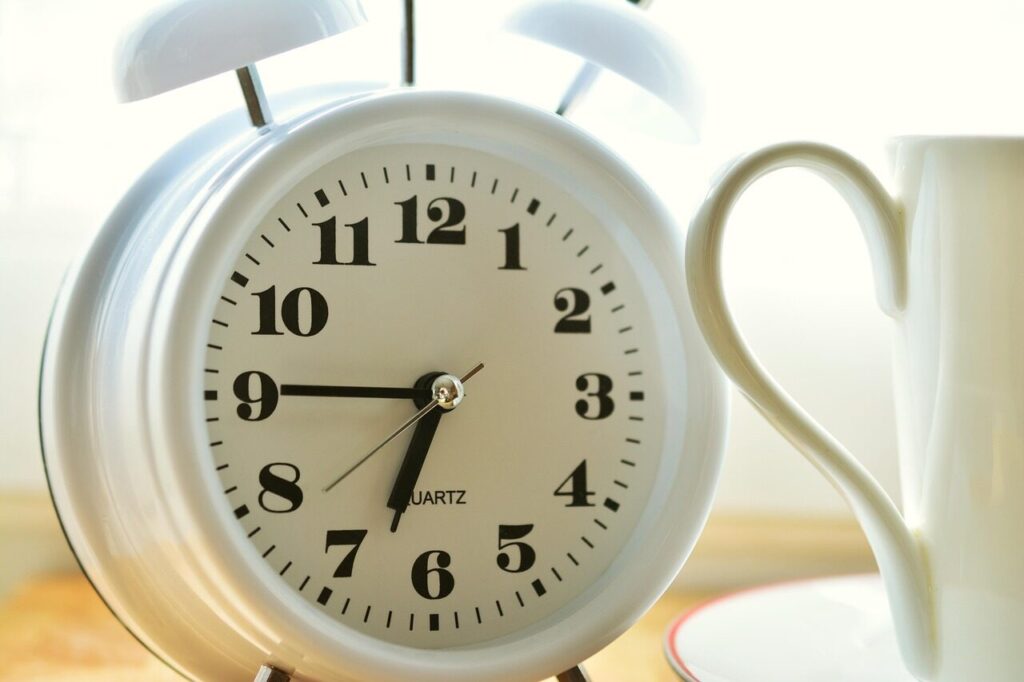
Some mornings you wake up fresh after six hours, other mornings you feel groggy after eight. One reason is timing. Sleep runs in cycles, and waking in the middle of deep sleep can leave you foggy. A sleep calculator works backward from your alarm to suggest bedtimes that line up with the end of a cycle.
How Sleep Cycles Work
Each night you move through light sleep, deep sleep and REM sleep in repeating cycles. Each cycle lasts about 90 minutes on average, though it can range from roughly 70 to 120 minutes. Most adults go through four to six cycles a night. Waking near the end of a cycle, during lighter sleep, usually feels easier. Our guide on how wearables track sleep stages explains what your tracker sees.
The Math Behind the Calculator
- Start with your wake-up time.
- Subtract full 90-minute cycles: 5 cycles is 7.5 hours, 6 cycles is 9 hours.
- Subtract about 15 minutes for the time it takes to fall asleep.
- The result is the time to turn the lights off.
Our sleep calculator does this instantly.
Bedtimes for Common Wake-Up Times
| Wake Up At | 5 Cycles (7.5 h) | 6 Cycles (9 h) |
|---|---|---|
| 5:30 AM | 9:45 PM | 8:15 PM |
| 6:00 AM | 10:15 PM | 8:45 PM |
| 6:30 AM | 10:45 PM | 9:15 PM |
| 7:00 AM | 11:15 PM | 9:45 PM |
| 7:30 AM | 11:45 PM | 10:15 PM |
Times include about 15 minutes to fall asleep.
Check It Against Your Tracker
Your real cycle length may differ from 90 minutes. A smartwatch or smart ring can help you fine-tune. Look at your sleep stage graph over a week and notice roughly how long each cycle takes, then adjust your bedtime by 10 to 15 minutes either way. Some watches also offer smart alarms that wake you during light sleep within a set window. If your data looks off, read why sleep tracking goes wrong.
Tips That Help the Calculator Work
- Keep the same wake-up time every day, including weekends.
- Get morning daylight to anchor your body clock.
- Avoid caffeine late in the day.
- Use bedtime mode on your watch to cut late notifications.
- Keep your room cool and dark.
Final Thoughts
A sleep calculator counts back from your wake-up time in roughly 90-minute cycles, plus a few minutes to fall asleep, to suggest a bedtime. Aim for five or six cycles, then fine-tune with your tracker’s data and a steady schedule. Pair it with readiness scores to see how better timing shows up in your daily numbers.
FAQs
Is every sleep cycle 90 minutes?
No. 90 minutes is an average, and cycles can range from about 70 to 120 minutes.
How many sleep cycles do I need?
Most adults do well with five or six. That is about 7.5 to 9 hours.
Can a smartwatch wake me between cycles?
Some can, with a smart alarm feature. It wakes you during lighter sleep near your alarm.




Write Your Review
No reviews yet. Be the first to share your experience!