

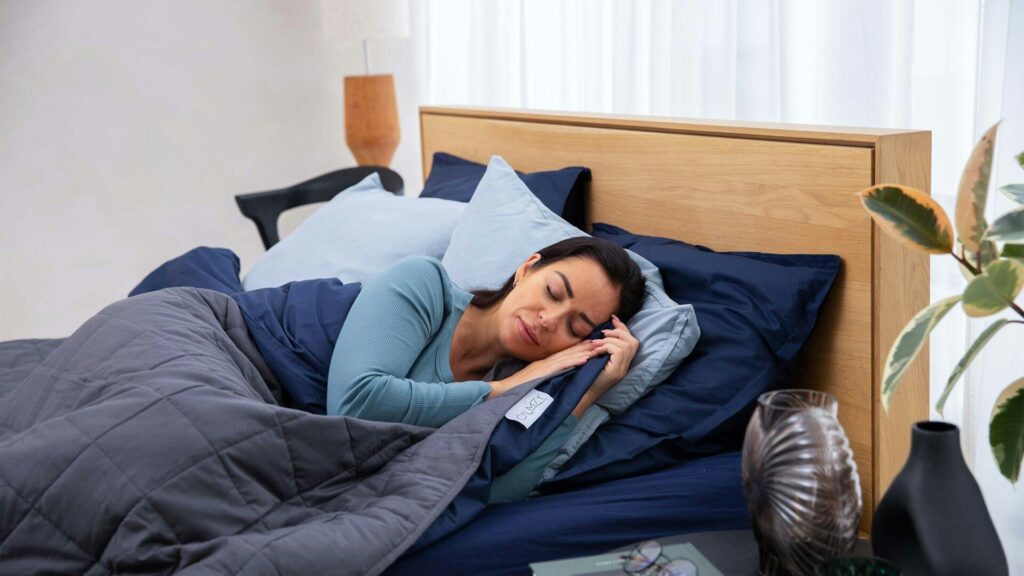
A sleep lab measures brain activity with electrodes on your scalp. A smartwatch or smart ring has none of that, yet it still shows light, deep and REM sleep every morning. It does this by reading signals from your body and estimating sleep stages from patterns that line up with each stage.
The Four Stages Your Wearable Reports
- Awake: short wake-ups during the night, most of which you will not remember.
- Light sleep: the largest share of the night, when your body starts to relax.
- Deep sleep: the slowest, most restful stage, usually more common early in the night.
- REM sleep: the stage linked to dreaming, usually longer toward morning.
A typical night moves through these stages in cycles of roughly 90 minutes. Early cycles tend to hold more deep sleep, while later cycles lean toward REM. That is why cutting a night short often reduces REM time the most.
The Signals Behind the Estimate
Each sensor adds a piece of the picture. The algorithm combines them to label each part of the night.
| Signal | Sensor | What It Suggests |
|---|---|---|
| Movement | Accelerometer | Still periods point to sleep, motion points to waking |
| Heart rate | Optical sensor | Lower, steadier rates fit deep sleep |
| Heart rate variability | Optical sensor | Changing patterns help separate REM from deep sleep |
| Breathing rate | Optical sensor | Regular breathing fits deeper stages |
| Skin temperature | Temperature sensor | Adds context about the night as a whole |
Our guides to optical heart rate sensors and HRV explain the heart signals in more detail.
How Accurate Is It?
Quick answer: wearables are good at telling sleep from wake and at showing total sleep time. Stage labels are estimates, so they are best used as trends rather than exact minutes.
- Total sleep time and bedtime consistency are the most reliable numbers.
- Deep and REM minutes can vary from a lab result on any single night.
- Lying still while awake, such as reading in bed, can be counted as light sleep.
- Different brands use different algorithms, so two devices on the same night may not match.
The best way to use the data is to compare you with yourself. If your deep sleep drops for a week after late workouts or late meals, that pattern is meaningful even if the exact minutes are not.
Wrist vs Finger vs Upper Arm
Smart rings sit on the finger, where blood vessels are close to the surface, and many people find them easier to wear at night. See our picks of the best smart rings for sleep tracking. Watches work well too when worn snugly. Some people prefer a band on the upper arm, covered in our list of screenless sleep trackers.
How to Get More Useful Sleep Data
- Wear the device a little snugger at night so the sensor stays in contact.
- Charge before bed or in the morning so the battery never dies overnight.
- Keep a regular bedtime for a week before you judge the trends.
- Look at weekly averages instead of reacting to one bad night.
If you wear a ring, a correct fit matters from the first night. Our smart ring setup guide covers that, and the sleep calculator helps you plan a bedtime around your wake-up time.
Final Thoughts
Wearables estimate sleep stages from movement and heart signals, not brain waves. Treat the stage breakdown as a helpful trend, focus on total sleep and consistency, and the data becomes a practical guide to better nights.
FAQs
Can a smartwatch measure deep sleep?
It estimates deep sleep from heart rate, HRV and stillness. The trend over weeks is more useful than one night’s number.
Why does my sleep score change so much?
Small changes add up. A late meal, alcohol, a warm room or a later bedtime can all shift heart signals and the stage estimate.
Is a smart ring better than a watch for sleep?
Many people find a ring more comfortable at night, which helps them wear it every night. Both can track sleep well when they fit properly.
Do naps show up in sleep tracking?
On many devices, yes. Some brands detect naps automatically, while others record only longer sleep periods, so check your app’s sleep settings.

Write Your Review
No reviews yet. Be the first to share your experience!